Roy Lichtenstein
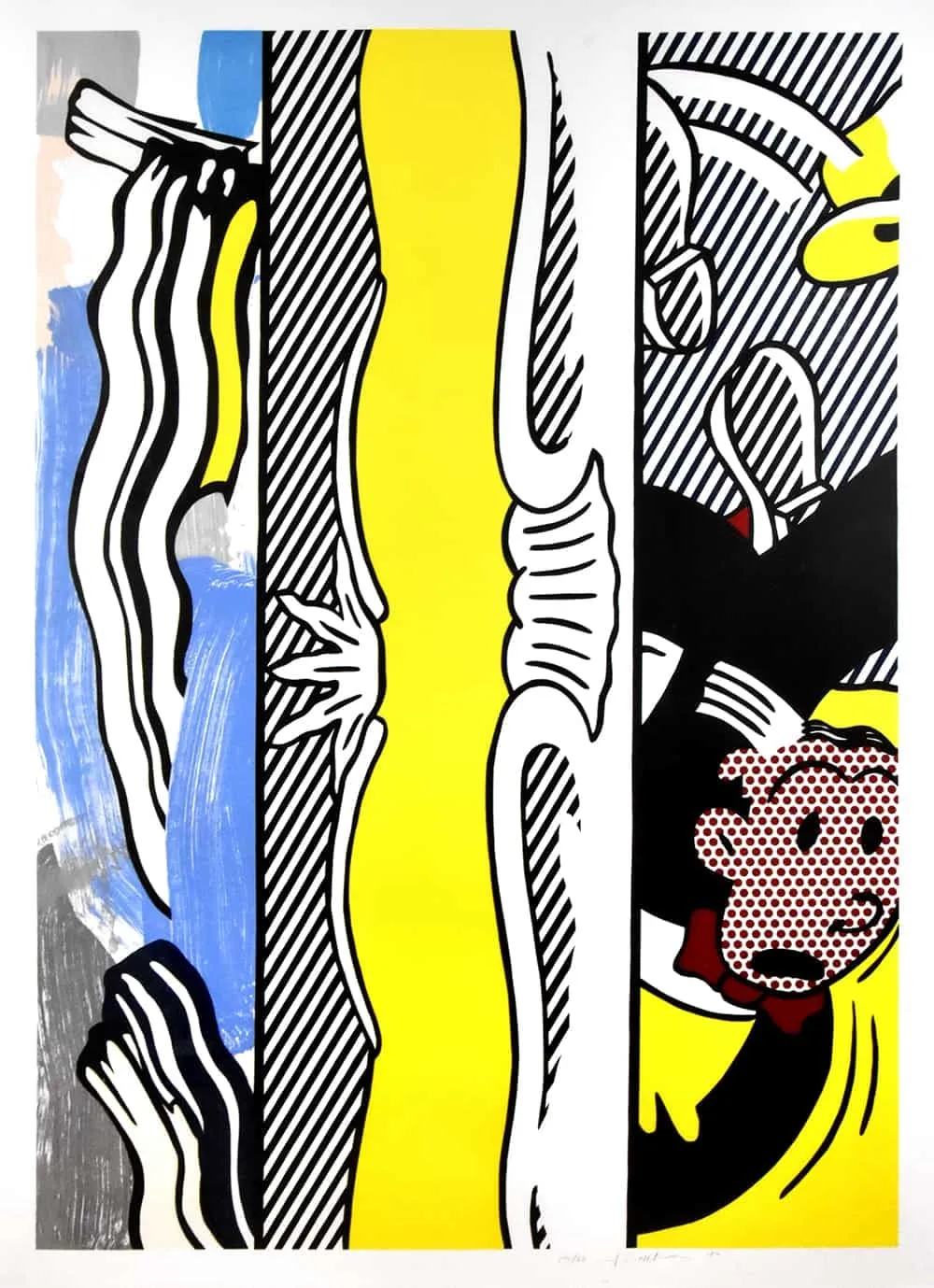
Two Paintings: Dagwood, from Paintings, 1984
Woodcut and Lithograph on Arches 88 paper
136.8 cm x 98.9 cm
53 7/8 x 38 15/16 in
53 7/8 x 38 15/16 in
Edition of 60
Signed, dated & numbered in pencil in the lower right margin
£85,000 GBP
Roy Lichtenstein’s Two Paintings: Dagwood, 1984, is part of the eight-part Paintings series, which parodies the boundaries between high and low art culture and explores notions of originality in art....
Roy Lichtenstein’s Two Paintings: Dagwood, 1984, is part of the eight-part Paintings series, which parodies the boundaries between high and low art culture and explores notions of originality in art.
Two Paintings: Dagwood features the central motif of the Paintings series: fictitious picture frames juxtaposed to distort the viewer’s perception. This vivid print contrasts abstract brushstrokes that evoke the 'painterly' gestures of traditional artworks with the cartoon image of Dagwood, a character from the 1930s comic strip Blondie. Lichtenstein’s recognizable pop art signatures—a distressed comic book character rendered in Ben-Day dots, bright colours, and delineated outlines—starkly contrast with the fluid, pastel-coloured brushstrokes reminiscent of Abstract Expressionist paintings.
True to his satirical form, in Two Paintings: Dagwood, he parodies both fine art and commercial modes of expression, blending them into a cohesive yet contradictory visual narrative.
Two Paintings: Dagwood features the central motif of the Paintings series: fictitious picture frames juxtaposed to distort the viewer’s perception. This vivid print contrasts abstract brushstrokes that evoke the 'painterly' gestures of traditional artworks with the cartoon image of Dagwood, a character from the 1930s comic strip Blondie. Lichtenstein’s recognizable pop art signatures—a distressed comic book character rendered in Ben-Day dots, bright colours, and delineated outlines—starkly contrast with the fluid, pastel-coloured brushstrokes reminiscent of Abstract Expressionist paintings.
True to his satirical form, in Two Paintings: Dagwood, he parodies both fine art and commercial modes of expression, blending them into a cohesive yet contradictory visual narrative.
Join our mailing list
* denotes required fields
We will process the personal data you have supplied to communicate with you in accordance with our Privacy Policy. You can unsubscribe or change your preferences at any time by clicking the link in our emails.