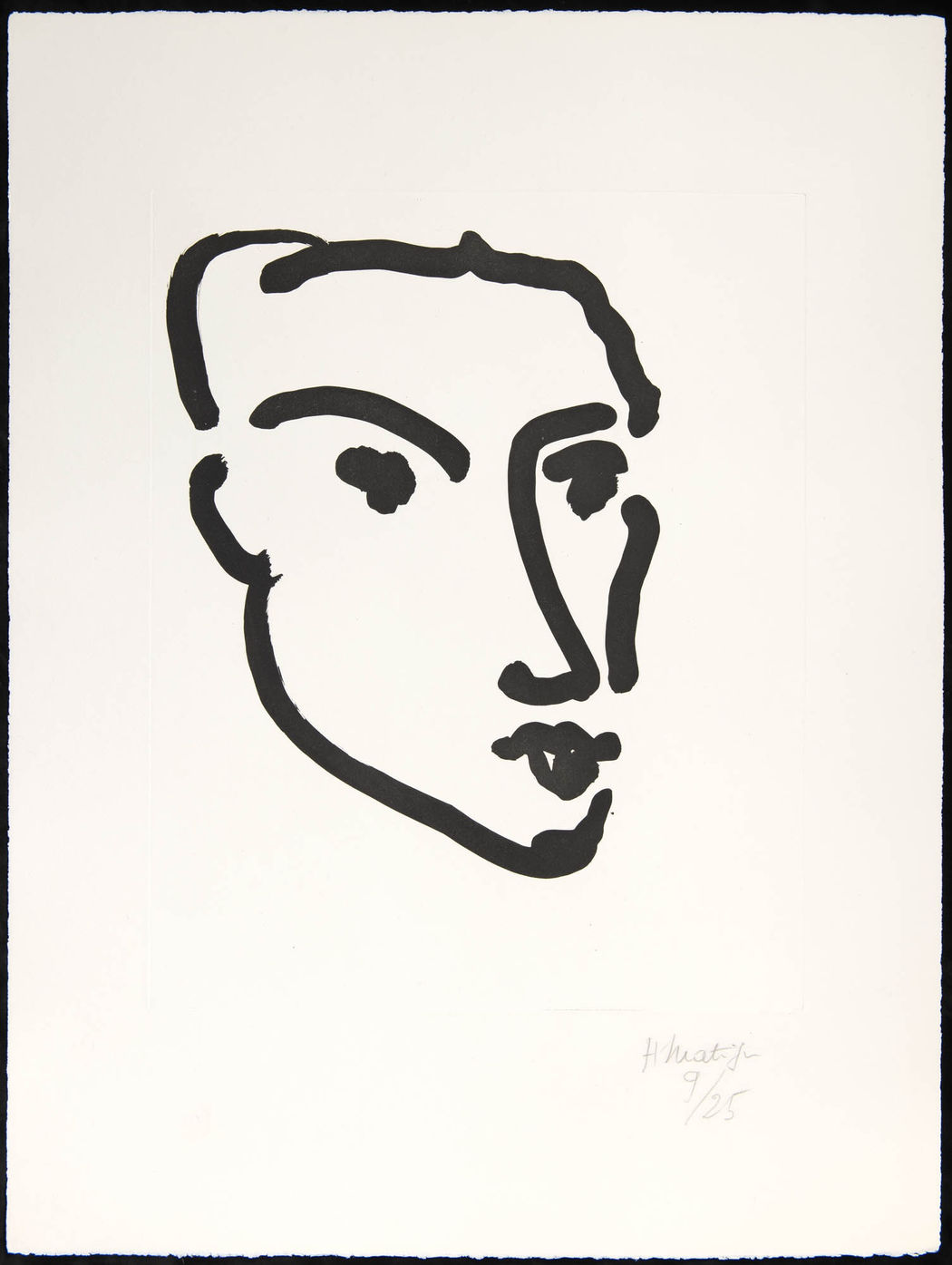
Henri Matisse, Nadia, Visage de Trois-Quarts (D.795), 1948
Henri Matisse is rightly celebrated as a pioneer of modern art, renowned for his vibrant paintings and iconic cut-outs. But in the quieter, more contemplative moments of his later life, Matisse turned to a different form of expression: aquatint. These striking black-and-white prints reveal an artist distilling his vision into pure form: focusing on line, light and gesture with poetic economy. Today, Matisse’s aquatints remain among the most sought-after prints in 20th-century art, prized for their elegance, rarity, and meditative power
What is an aquatint?
Aquatint is an intaglio printmaking technique that allows the artist to create tonal areas, rather than relying solely on line. Using powdered resin and acid to etch the surface of a copper plate, aquatint produces velvety, shaded effects more akin to drawing or wash. In the hands of Matisse, aquatint became a vehicle for restraint and lyricism, a way to evoke volume and light with the softest of shadows and the sparsest of strokes.
Working largely from bed following major surgery in the 1940s, Matisse returned to black-and-white media with renewed focus. Assisted by his publisher and long-time collaborator Tériade, he created several celebrated suites of aquatints, which often stemmed from his earlier ink brush drawings or from his ongoing interest in the human figure and classical themes. These include a series of books and illustrated portfolios, such as Visages, which contain some of his most striking aquatints. These projects allowed Matisse to bridge visual art and literature, often drawing on classical mythology and poetic allegory.
Aquatints from Visages and Thèmes et Variations
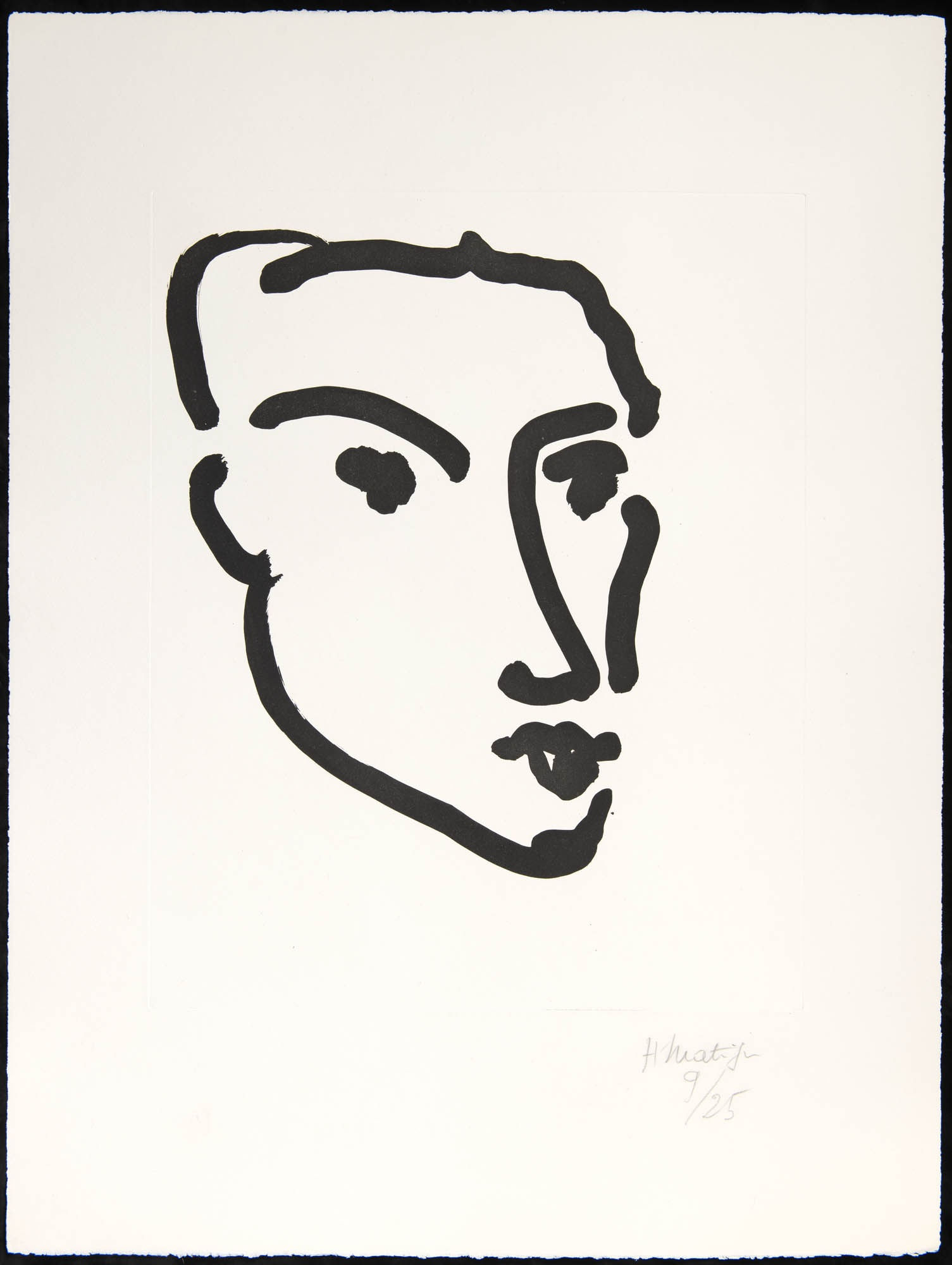
Henri Matisse, Nadia, Visage de Trois-Quarts (D.795), 1948
Among Matisse’s most celebrated aquatint series is Visages (1946-47), a collection of bold, minimal portraits of women rendered with a single flowing line or a series of elegant curves. Works such as Visage à la chevelure noire and Visage au collier demonstrate Matisse’s ability to suggest personality and emotion with barely a gesture. These portraits are both intimate and universal, evoking timeless archetypes of beauty, contemplation, and presence.
Another significant suite is Thèmes et Variations (1943), a series that revisits a single seated female figure from multiple angles. Although originally drawn in pen and ink, several variations were later developed into aquatints, including Thème A, Variation 3 and Thème D, Variation 6. These works invite the viewer into Matisse’s studio process: repetition as meditation, variation as revelation.
Paticha Masque
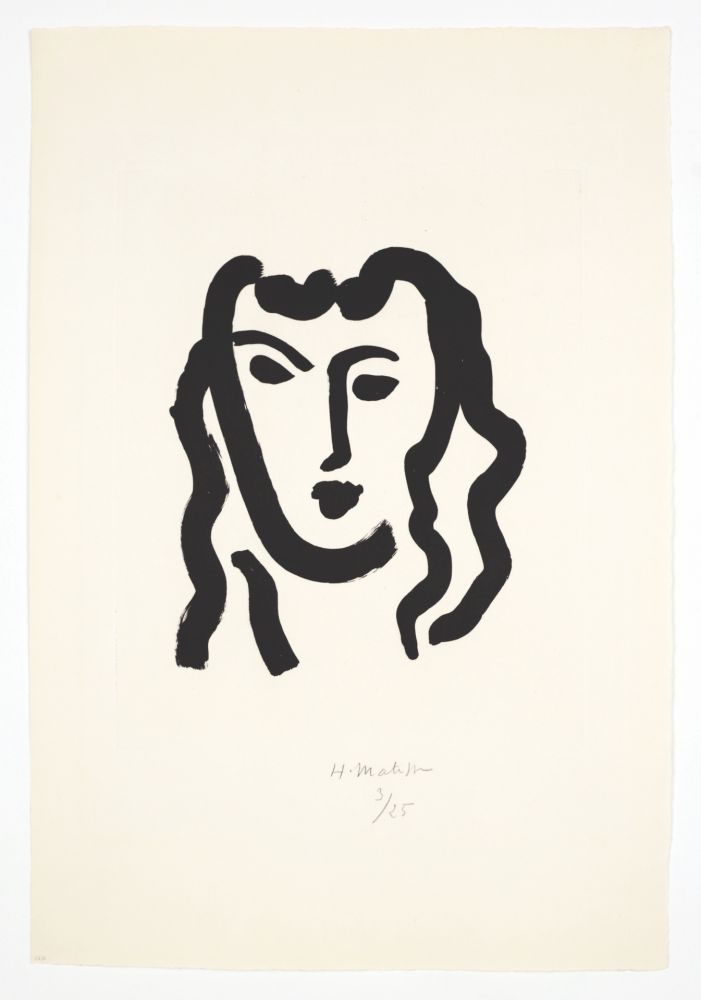
Henri Matisse, Paticha Masque, 1947
Paticha Masque is one of Henri Matisse’s striking late aquatints, created in the 1940s as part of his celebrated exploration of simplified portraiture. Rendered in bold black lines against white, the work exemplifies Matisse’s mastery of distilling the human face to its essential, expressive contours. With a theatrical flair hinted at by the title, Paticha Masque evokes both mask and identity, suggesting the interplay between outward appearance and inner character. Like many of Matisse’s aquatints from this period, it carries the energy of his brush and ink drawings, transformed into print with remarkable delicacy and power.
Original Matisse aquatints offer collectors a unique opportunity to own a work by the artist that is both intimate and accessible. Unlike his monumental canvases or rare paintings, Matisse prints, particularly aquatints, are often available in limited editions, allowing for connoisseurship without the barriers of multi-million-pound price tags. Their historical importance, combined with their visual purity, makes them highly desirable on the art market. Moreover, Matisse aquatints represent a rare harmony between technical skill and emotional subtlety. For collectors and art lovers seeking artworks that capture the distilled soul of modernism, these prints are enduring treasures.
At Andipa Editions, we offer original Matisse aquatints for sale. Whether you are beginning your collection or deepening it, these prints offer a timeless connection to Matisse’s late-period mastery.
Contact Andipa Editions via sales@andipa.com or call +44 (0)20 7589 2371 for more information on our current Matisse prints available.
