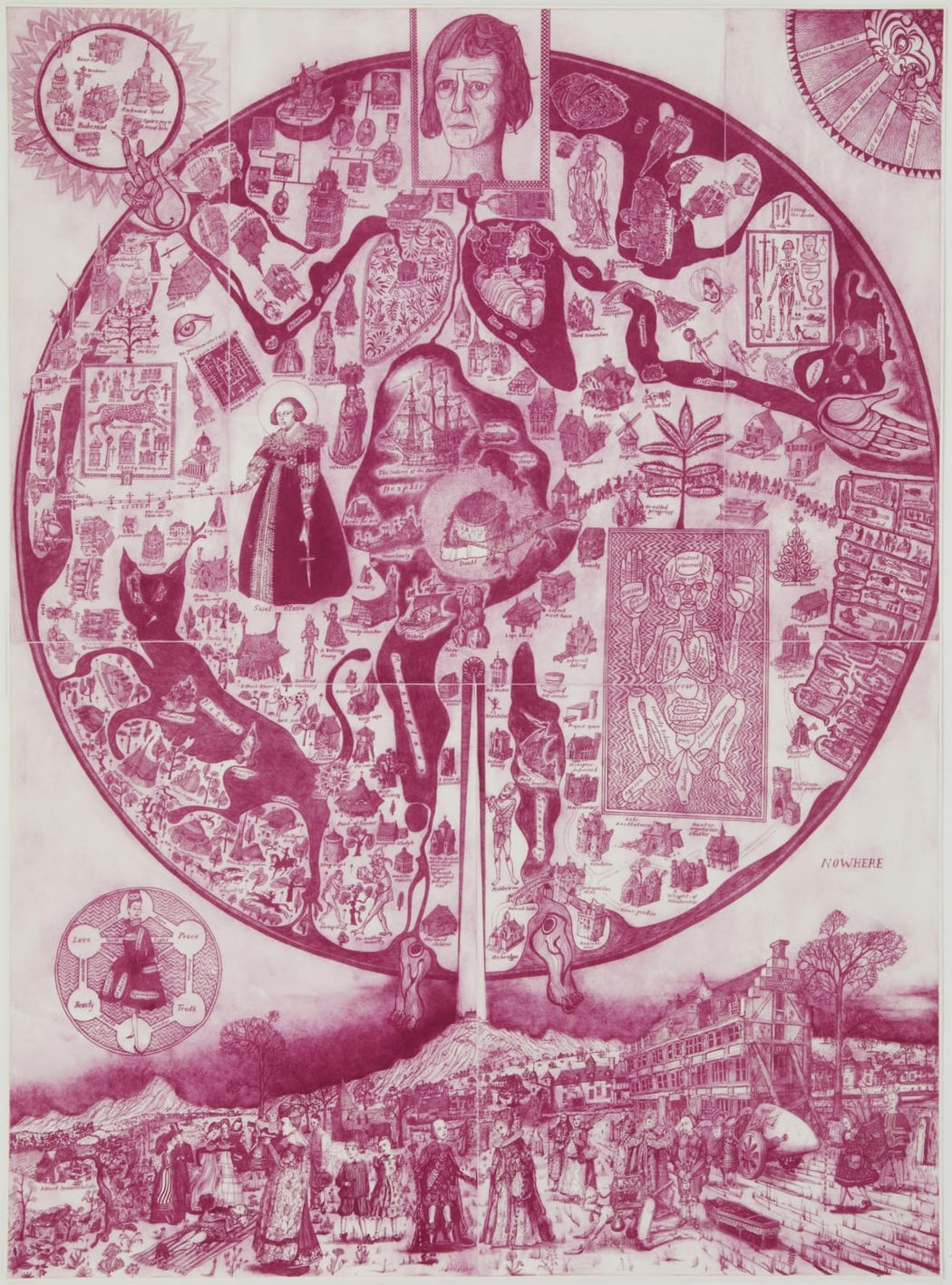
 Grayson Perry, Map of Nowhere, Purple Edition
Grayson Perry turns 65
Grayson Perry turns 65 this year, marking a remarkable milestone in one of Britain’s most distinctive and influential artistic careers. Over the decades, Perry has evolved from an outsider on the fringes of the art establishment into one of its most beloved, provocative, and insightful voices. Known equally for his ceramic works, tapestries, and cross-dressing alter ego Claire, Grayson Perry has consistently used his art to examine the structures of identity, class, and taste in British society. His work is celebrated not only for its craftsmanship and humour but also for its social commentary, which remains as sharp and relevant today as it was when he first came to public attention.
Early Life
Born in Chelmsford in 1960, Perry's early life was marked by emotional upheaval, a theme that would later recur in his art. After studying at Portsmouth Polytechnic in the early 1980s, he became known in the London art scene as part of the post-punk generation of artists. While many of his contemporaries turned to painting or conceptual installations, Perry made the unusual choice to work in ceramics, traditionally seen as a craft medium rather than fine art. But this choice was never about conformity. Instead, Perry used it as a way to smuggle complex and often unsettling ideas about masculinity, trauma, and cultural value into a medium associated with domesticity and function. Perry’s breakthrough came in 2003 when he won the Turner Prize, becoming the first ceramicist to do so. At the time, he was both celebrated and misunderstood - his cross-dressing and frank discussions of personal identity and sexuality became focal points in the media. But far from being a gimmick, Perry’s personal presentation was part of a larger exploration of the masks we wear in society and how identity is shaped by upbringing, class, and cultural expectation. As Claire, dressed in frills, florals, and platform shoes, he challenged the conventions not just of gender but of the art world itself.
Rise to National Recognition
Since then, Grayson Perry has become something of a national treasure. He has exhibited at major institutions like the British Museum, the Serpentine Gallery, and the Royal Academy, and his large-scale tapestries, such as "The Vanity of Small Differences", have toured the country, engaging audiences far beyond the traditional art-going public. These works, with their vibrant colours and layered symbolism, take inspiration from Hogarth and medieval religious art, yet speak directly to contemporary concerns: aspiration, consumerism, and the complicated web of class in modern Britain. As Perry turns 65, it’s clear that his work has only deepened in its relevance. His recent projects, including the widely watched TV series Grayson’s Art Club, brought creativity into people’s homes during the COVID-19 pandemic, offering a sense of community, catharsis, and connection through art. The show reaffirmed Perry’s commitment to demystifying the artistic process and making art accessible - emotionally, intellectually, and socially. His ongoing advocacy for arts education and mental health awareness further shows that his role in British culture extends far beyond the gallery walls.
Themes, Style and Social Commentary
Collectors and critics alike have continued to appreciate Perry’s output. His limited edition prints, ceramic works, and artist books remain highly sought after, not only for their visual impact but for the stories they tell. Each piece is layered with references to history, politics, and personal experience, wrapped in humour and ornamentation that belie the seriousness of the underlying themes. Whether it's a vase inscribed with sardonic takes on consumer culture or a tapestry capturing the contradictions of middle-class life, Perry’s work holds a mirror to society with both empathy and wit. Perry’s ability to bridge the personal and the political is perhaps his greatest strength. His art doesn't lecture; it converses. It invites viewers to see themselves, sometimes uncomfortably, in the characters and narratives he presents. And as the UK continues to navigate questions of national identity, cultural division, and social inequality, Perry’s voice feels more necessary than ever. He challenges without alienating, confronts without condemning, and always does so with a generosity of spirit that invites dialogue rather than shuts it down. In his 65th birthday year, Grayson Perry stands as a testament to the power of persistence, individuality, and creative courage. He has navigated fame and criticism with humour and integrity, refusing to be boxed in by trends, expectations, or institutions. His legacy is already significant, but it also feels incomplete - because Perry shows no signs of slowing down. If anything, his recent work suggests an artist still hungry to explore, still restless, still playful, still politically engaged.
Collecting Grayson Perry: Why His Work Matters
For those interested in collecting contemporary British art, Perry’s work represents both a smart investment and a deeply rewarding aesthetic and intellectual experience. His editions continue to attract attention from seasoned collectors and newcomers alike, bridging the gap between high art and popular appeal. In celebrating 65 years of Grayson Perry, we’re not just honouring a career, we’re celebrating a voice that continues to shape and challenge the cultural landscape of Britain.
