What is a Trial Proof in Printmaking?
In the world of printmaking, there is a word that instantly stirs curiosity among collectors: trial proof. Unlike the numbered editions or the artist’s proofs that mirror them, trial proofs stand apart as rare, fragile experiments — the moments when an artist pauses, tests, hesitates, and dares something different before committing to the final edition.
The Allure of Trial Proofs for Collectors
To hold a trial proof is to stand at a crossroads in the creative process. These prints, often marked discreetly with “T.P.” in pencil, are not mere rehearsals. They are records of decision-making, of artistic exploration in real time. Sometimes the differences from the published edition are subtle — a slightly altered shade, a shift in the density of ink. At other times, they are radical: an entirely different palette, a background added or erased, even a compositional element abandoned altogether. In their very uncertainty, trial proofs capture something unique: the artist thinking aloud on paper.
This is what makes them so alluring to collectors. In a market where editions can run into the hundreds, the scarcity of a trial proof is striking. Often only one or two exist. To own one is to possess not simply a print, but a trace of dialogue between artist and printer, the intimate workshop conversation that usually vanishes once the edition is fixed. These proofs are the archaeology of printmaking, revealing the layers of process buried beneath the polished surface of the finished work.
Andy Warhol’s Trial Proofs
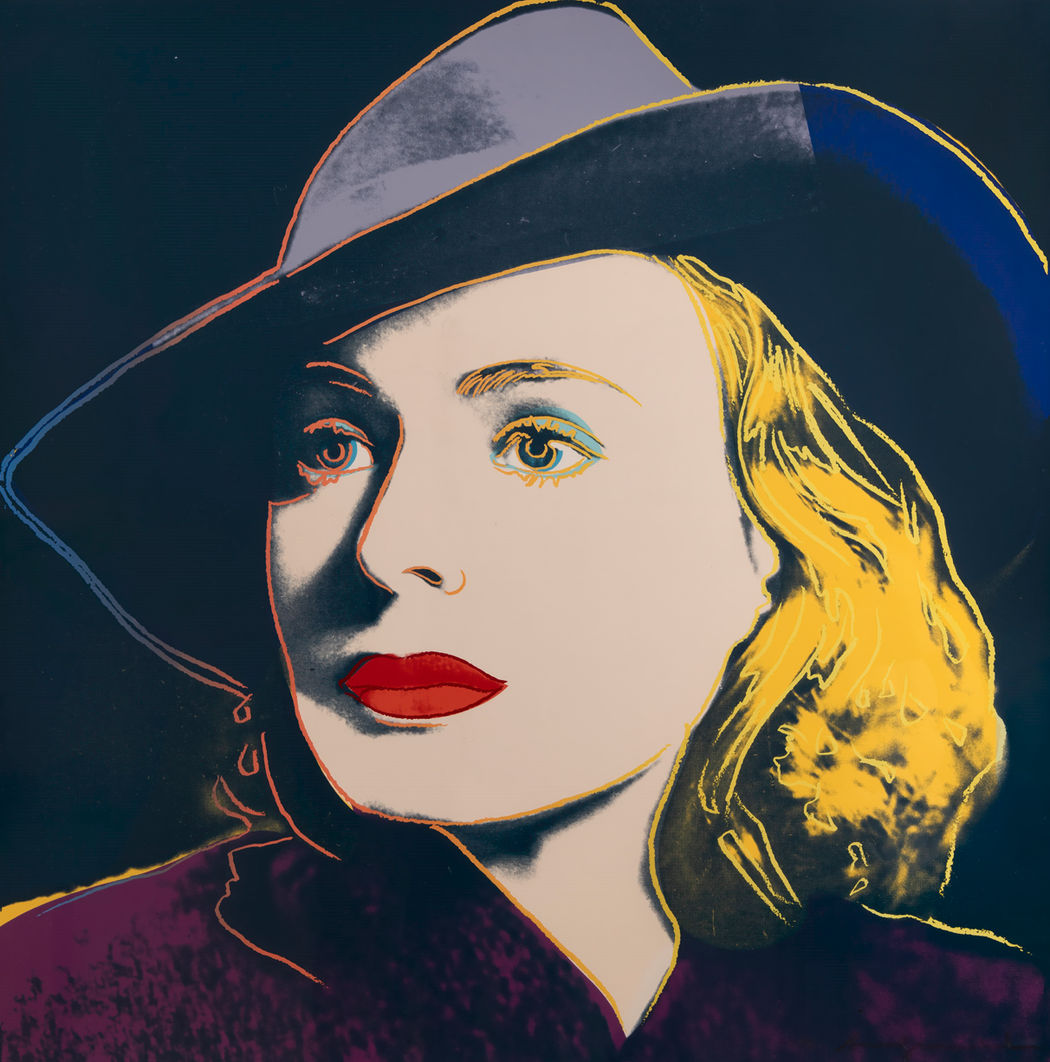
Consider Andy Warhol. His trial proofs often reveal startlingly different colourways from the editions we know so well. In his Ingrid Bergman series, for instance, there are proofs where the actress’s features appear in acidic yellows or deep violet shadows rather than the bright, Pop palette that ultimately defined the edition. For some collectors, these alternate versions are more daring, more beautiful, precisely because they were never “resolved.” They are Warhol in mid-conversation with himself, trying on possibilities.
David Hockney’s Trial Proofs
David Hockney’s proofs tell a different story. Meticulous in his manipulation of line and colour, Hockney would explore how a wash of aquatint shifted atmosphere, or how a change in paper absorbed or resisted pigment. In his trial proofs one sees the artist refining light itself, chasing a sensation until he finds the exact balance. Collectors who hold these impressions often describe them as keys that unlock Hockney’s creative vocabulary.
Banksy and Urban Art Trial Proofs
Even in the realm of urban art, trial proofs hold their power. Banksy, known for his anonymity, is also meticulous in production. His trial proofs sometimes bear handwritten notes, stencil misalignments, or tonal variations that never made it to the public edition. These works offer a glimpse of Banksy the craftsman rather than the myth, reminding us that behind the satire is a patient maker, revising and adjusting until the image lands with maximum impact.
Francis Bacon’s Trial Proofs
Francis Bacon’s proofs are yet another kind of revelation. Translating his chaotic, visceral paintings into the more controlled process of etching and lithography was no easy task. His trial proofs reveal adjustments in depth and background, subtle shifts that allowed him to retain something of the ferocity of oil paint on canvas within the medium of print. They stand as a testament to how Bacon struggled — and succeeded — in bringing his uncompromising vision into another form.
The art market has long recognised the significance of these works. Auction houses carefully distinguish trial proofs from standard editions, often giving them special prominence in catalogues. Prices reflect both their rarity and their status as documents of process. Yet value is not measured only in financial terms. Collectors who live with trial proofs describe them as deeply personal objects, imbued with the tension of choices made and unmade. They are not just “another print,” but part of the artist’s biography in material form.
Of course, not all trial proofs carry equal weight. A proof that differs only slightly from the edition may hold less appeal than one that reveals a radical variation or bears the artist’s handwritten annotations. Provenance, as always, is critical. Serious collectors look for documentation — references in catalogue raisonnés, invoices from established galleries, notes from the printer’s workshop. The mark “T.P.” alone is not enough. Trust and expertise play as large a role here as aesthetic preference.
For those considering acquiring a trial proof, the advice is simple but essential: buy with knowledge, and buy with passion. Work with specialists who know the terrain, who can explain not only the technical distinctions but the wider art historical context. At Andipa, we often tell collectors that a trial proof is as much about connection as it is about investment. One should choose a proof not because it is rare — though it will be — but because it resonates, because it speaks of the artist in a way that moves you.
There is also a certain poetry in how trial proofs remind us of the vulnerability of creation. We often encounter art only in its finished form, perfected, signed, editioned. Trial proofs whisper the story of hesitation, error, reconsideration. They remind us that art is not a straight path from idea to object, but a series of attempts, some abandoned, others refined. They are records of doubt and discovery — and perhaps that is why they feel so human.
In the end, trial proofs occupy a fascinating middle ground. They are neither wholly multiples nor wholly unique; neither finalised nor entirely unfinished. They are artefacts of becoming. And for collectors, they offer not only rarity but intimacy, the chance to step closer to the artist’s hand and mind. To own a trial proof is to own the moment before certainty, the flicker of possibility before resolution. It is to hold, in fragile paper and ink, the truth that art is never just about perfection, but about process. And it is this, perhaps above all, that makes them treasures.
