

Keith Haring
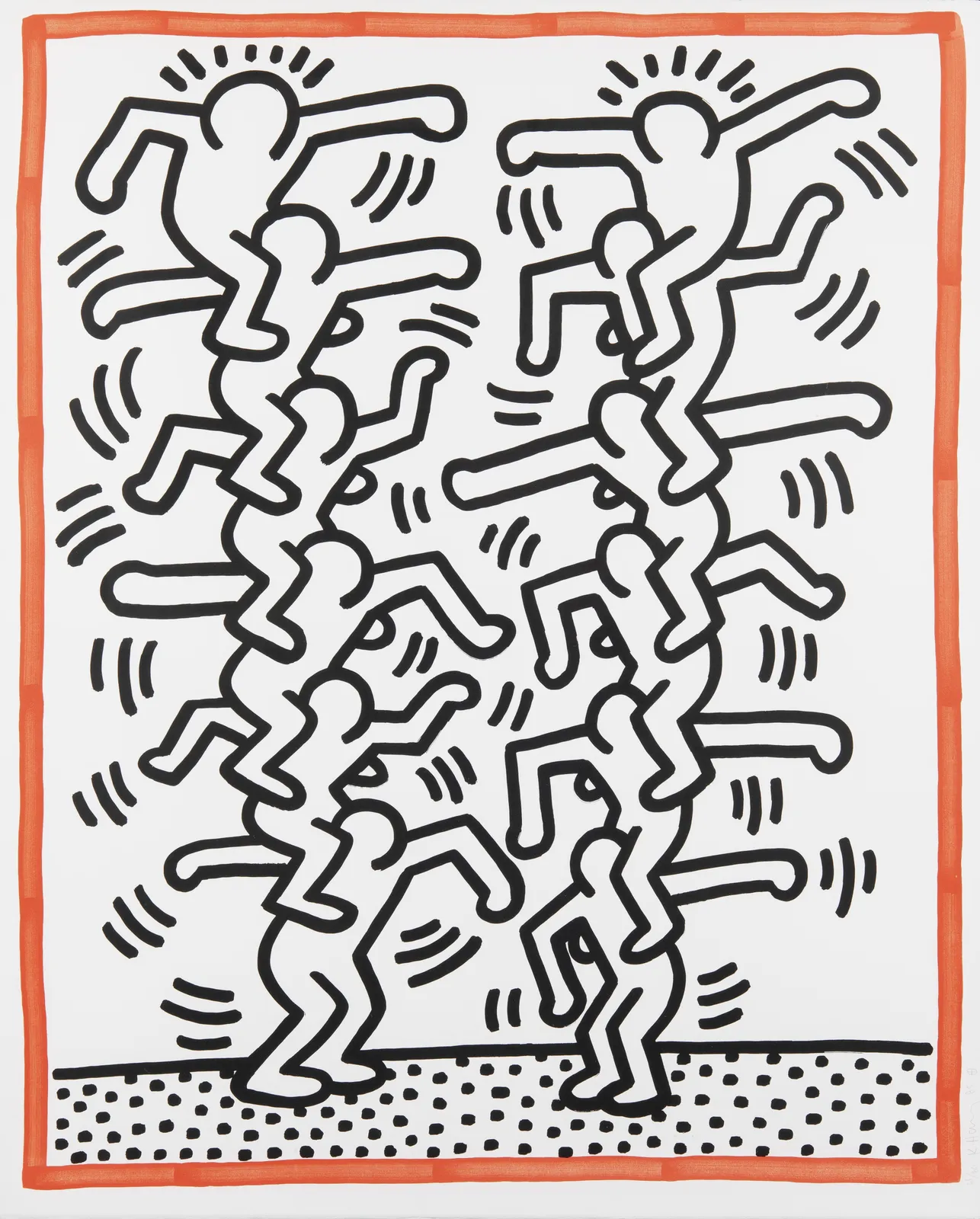
Plate 3 Three Lithographs (People Ladder), 1985
Lithograph in black and red on BFK Rives paper
Sheet: 101.5 x 81 cm. (40 x 32 in.)
Frame: 126 x 107 cm. (49.5 x 42 in.)
Frame: 126 x 107 cm. (49.5 x 42 in.)
Edition of 80
Signed & numbered lower right
Excellent condition
Framed
Excellent condition
Framed


Edition 61 of 80, plus 20 artist’s proofs and 3 hors commerce impressions. From the series of three lithographs. Created in 1985, Plate 3, from Three Lithographs, commonly known as...
Edition 61 of 80, plus 20 artist’s proofs and 3 hors commerce impressions. From the series of three lithographs.
Created in 1985, Plate 3, from Three Lithographs, commonly known as People Ladder, dates from a pivotal moment in Keith Haring’s career, as the visual language developed through his New York subway drawings gained an increasingly international audience. This impression is numbered 61 from the edition of 80, with a further 20 artist’s proofs and three hors commerce impressions, and was published by Edition Schellmann, Munich and New York.
Within a broad red border, two vertical columns of simplified human figures rise from a densely marked ground. Each figure appears to balance upon the next, creating a pair of precarious human structures. Black radiating lines animate the bodies and interrupt the composition’s underlying symmetry, while the restricted palette of red, black and white lends the image the visual force of a poster or public sign. The scale of the sheet allows Haring’s economical line to assume an emphatically physical presence.
Haring developed his vocabulary of faceless figures, rhythmic outlines and repeated symbols while drawing in chalk on unused advertising panels in the New York subway system between 1980 and 1985. These rapidly executed public works were intended to communicate directly with a diverse urban audience. Although transferred here to the more controlled medium of lithography, the image retains the speed, clarity and collective energy associated with that earlier practice.
The stacked figures may be read as an image of cooperation and mutual dependence, although their unstable arrangement also introduces a sense of vulnerability. Each body simultaneously supports and relies upon another, allowing the composition to suggest both collective strength and the fragility of social structures. In this balance between accessibility and ambiguity, People Ladder exemplifies Haring’s ability to transform a concise graphic motif into a broader reflection upon human connection and shared responsibility.
A detailed condition report is available upon request.
Created in 1985, Plate 3, from Three Lithographs, commonly known as People Ladder, dates from a pivotal moment in Keith Haring’s career, as the visual language developed through his New York subway drawings gained an increasingly international audience. This impression is numbered 61 from the edition of 80, with a further 20 artist’s proofs and three hors commerce impressions, and was published by Edition Schellmann, Munich and New York.
Within a broad red border, two vertical columns of simplified human figures rise from a densely marked ground. Each figure appears to balance upon the next, creating a pair of precarious human structures. Black radiating lines animate the bodies and interrupt the composition’s underlying symmetry, while the restricted palette of red, black and white lends the image the visual force of a poster or public sign. The scale of the sheet allows Haring’s economical line to assume an emphatically physical presence.
Haring developed his vocabulary of faceless figures, rhythmic outlines and repeated symbols while drawing in chalk on unused advertising panels in the New York subway system between 1980 and 1985. These rapidly executed public works were intended to communicate directly with a diverse urban audience. Although transferred here to the more controlled medium of lithography, the image retains the speed, clarity and collective energy associated with that earlier practice.
The stacked figures may be read as an image of cooperation and mutual dependence, although their unstable arrangement also introduces a sense of vulnerability. Each body simultaneously supports and relies upon another, allowing the composition to suggest both collective strength and the fragility of social structures. In this balance between accessibility and ambiguity, People Ladder exemplifies Haring’s ability to transform a concise graphic motif into a broader reflection upon human connection and shared responsibility.
A detailed condition report is available upon request.
Provenance
Private Collection, UKMartin Lawrence Galleries
アンディパエディションメーリングリストに登録する
* denotes required fields
We will process the personal data you have supplied to communicate with you in accordance with our Privacy Policy. You can unsubscribe or change your preferences at any time by clicking the link in our emails.