-

-
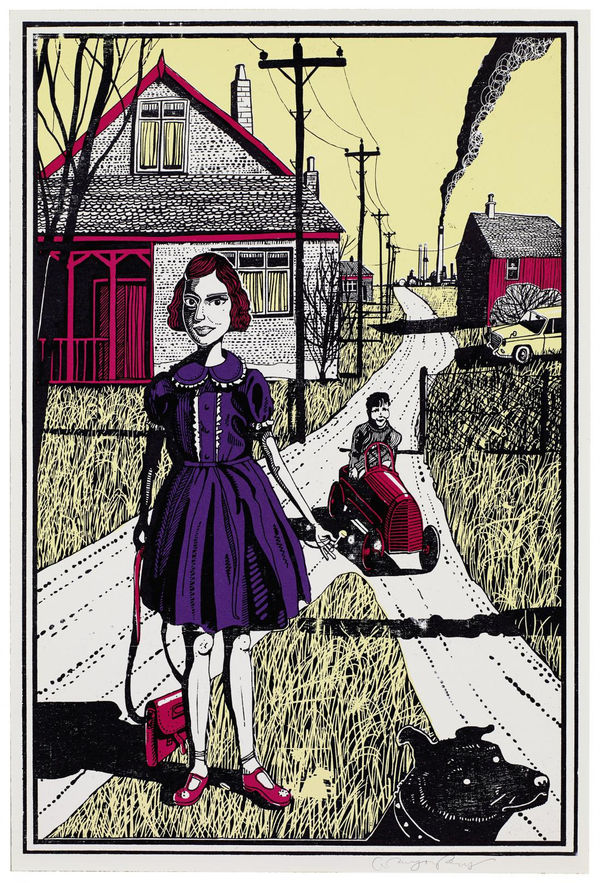
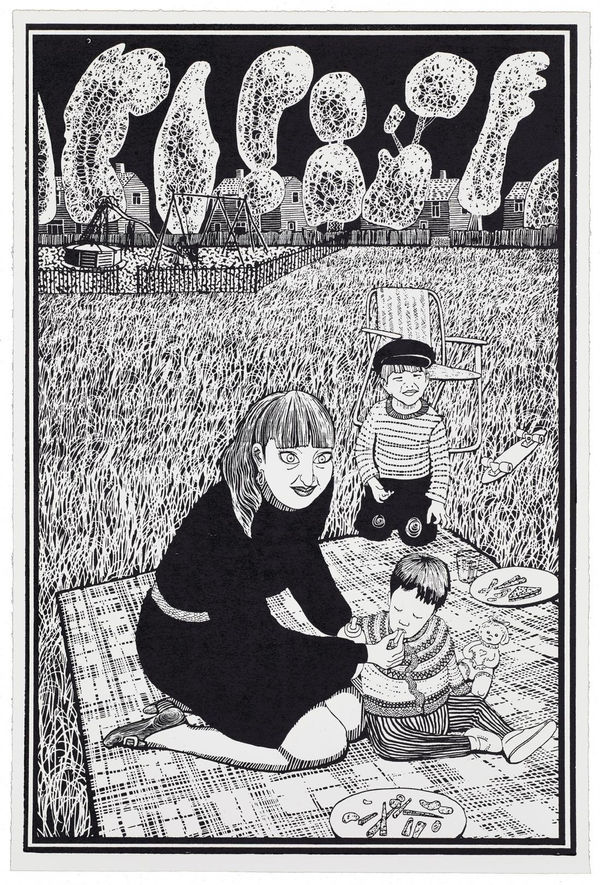
"I was very much trying to pick up on the atmosphere in Larkin's poem 'Afternoon' where he talks about the young parents in the park: 'Before them, the wind / Is ruining their courting-places [...] Something is pushing them / To the side of their own lives.'"
-
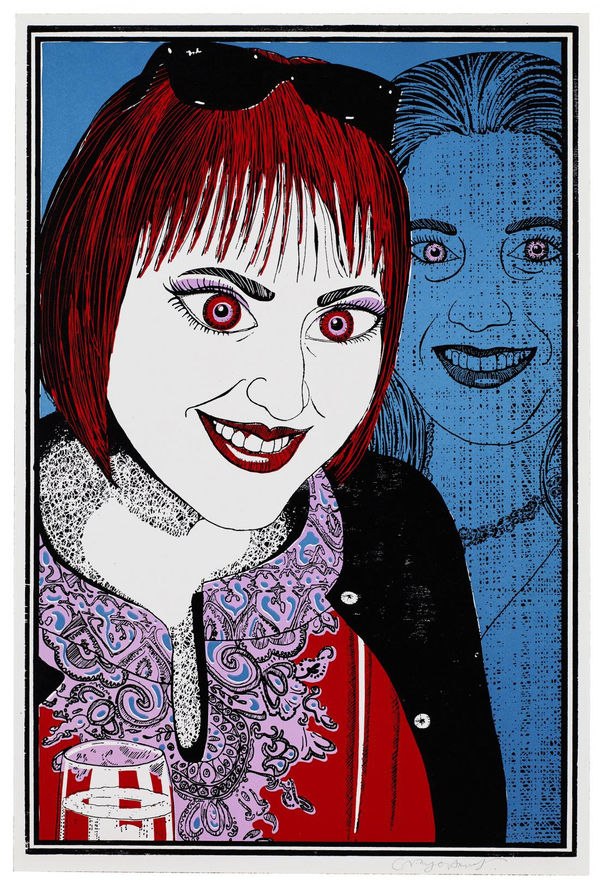
SIX SNAPSHOTS OF JULIE (COLOUR)
Series of 6 woodcuts with lithographic underlay on 185gsm Aquarelle Arches Satin paper -
-
'The black and white complemented the rest of the house, which I really wanted to zing. I like the idea of the wallpaper on the ceiling being like the cheap Russian prints called lubok that peasants would have pasted directly onto their walls.'
-
SIX SNAPSHOTS OF JULIE
Series of 6 woodcuts with lithographic underlay on 300gsm Somerset Soft White paper -
-
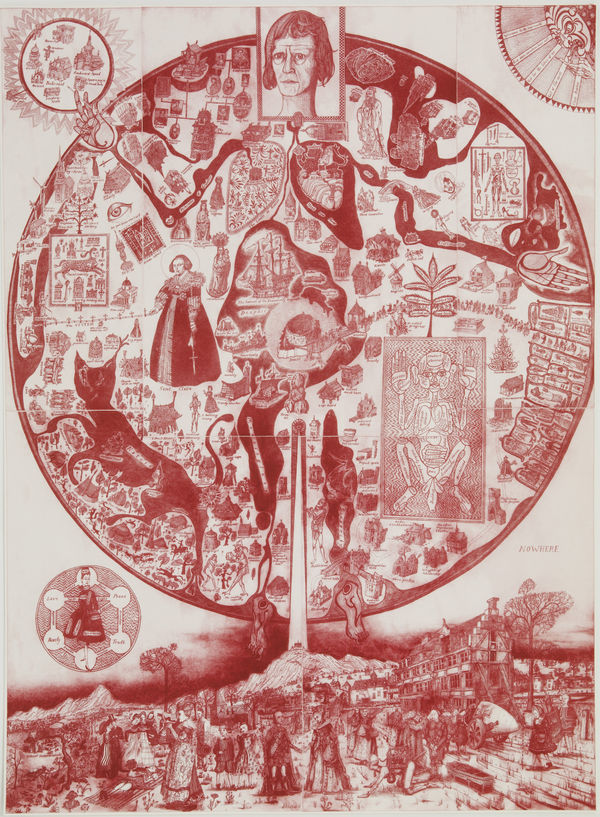
A MAP OF NOWHERE
Various ColourwaysPrints are no secondary art from for Grayson Perry, they are considered, large-scale final pieces. A vocal advocate for therapy and analysis, in the Map of Nowhere Perry explores his own belief system; his opinions contend with those he finds crowding around him in wider society. The print's grand proportions encompass the artist's taste for niggling detail. Perry started in the top left-hand corner, and worked towards the bottom right-hand corner, without planning the in-between; instead ideas were allowed to emerge, leading from one to another, through the creation process.
-
'The starting point for this print was Thomas More's Utopia. Utopia is a pun on the Greek ou topos meaning 'no place'. I was playing with the idea of there being no Heaven. People are very wedded to the idea of a neat ending: our rational brains would love us to tidy up the mess of the world and to have either Armageddon or Heaven at the end of our existence. But life doesn't work like that - it's a continuum.'
-
-
-
ANIMAL SPIRIT
Various ColourwaysPerry’s art work is a large print of an anmal that is half bull, half bear. It was insipired by the phrase "animal spirit" - which he says is a euphemism for the exhuberant "non-rational" thinking that was blamed for the 2008 financial crash. Many bankers he spoke to described this period as an aberration, rahter than the intrinsic masculine culture of the financial world.
-
-
-
A Map Of Days
Exhibition: The Life of Julie Cope | Grayson Perry: Andipa
Past viewing_room