Themes and Ideas in Hirst’s Butterfly Art
Throughout his career, Hirst’s use of butterflies has been closely associated with transformation, growth, and change, which he explores in depth. The butterfly is a symbol with rich cultural significance across the world. In Ancient Greek mythology, it was linked to Psyche, representing the soul and spiritual metamorphosis. Native American cultures regarded the butterfly as a sign of change, joy, and renewal, often depicting it in art and jewelry. In Chinese tradition, the butterfly symbolizes love and happiness, frequently appearing alongside floral motifs. In Mexican culture, particularly during the Day of the Dead, the monarch butterfly is believed to embody the souls of the deceased, with its migration seen as a return of departed loved ones. Hinduism associates the butterfly with reincarnation, viewing its metamorphosis from caterpillar to butterfly as a metaphor for the soul’s journey through multiple lives toward a higher state of being.
Early Work: The Butterfly Paintings
Hirst's earliest works featuring butterflies were his "Butterfly Paintings," which he created in the early 1990s. These works consisted of large, colourful canvases on which Hirst had glued real butterfly wings in intricate patterns. The butterfly wings created a visual effect that was both beautiful and unsettling, as the viewer was confronted with the stark contrast between the bright, vibrant colours of the wings and the dark, sombre background of the canvas.
The Butterfly Paintings were widely acclaimed, and they helped establish Hirst as one of the leading artists of his generation. However, they also attracted criticism from animal rights activists, who accused Hirst of cruelty for using real butterfly wings in his works.
The Pharmacy and In and Out of Love:
In the mid-1990s, Hirst began incorporating live butterflies into his installations. One of his most famous works from this period was "The Pharmacy," a large-scale installation that recreated a pharmacy complete with shelves of pill bottles and medicine containers. The walls of the pharmacy were lined with tanks containing live butterflies, which flew freely around the space.
Another notable work from this period was "In and Out of Love," a two-part installation that featured a room filled with live butterflies and a separate room containing empty pupae cases. The installation was designed to explore themes of life and death, transformation and decay.
The Butterfly Kaleidoscope:
In the late 1990s, Hirst began creating large-scale installations featuring thousands of butterfly wings arranged in kaleidoscopic patterns. The Butterfly Kaleidoscope works were often exhibited in darkened rooms, with the butterfly wings illuminated by UV light to create a psychedelic, otherworldly effect.
Sanctum:
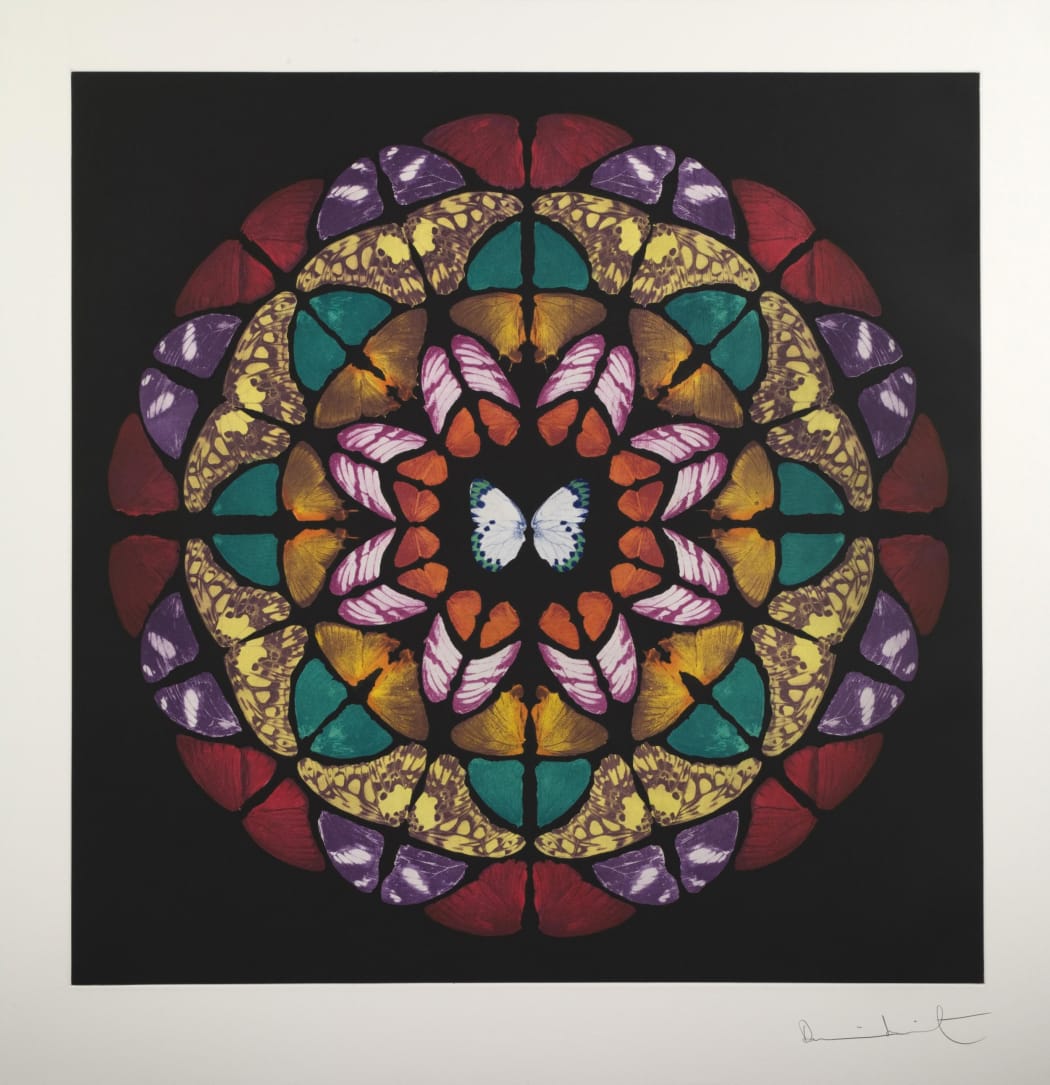
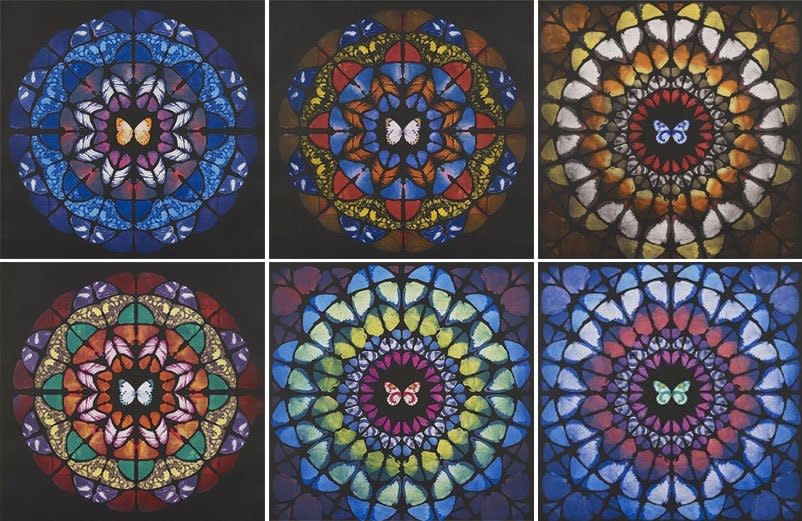
Created in 2009, the series consists of 6 etchings, each an edition of 59 that features a kaleidoscopic image of a butterfly. The images are arranged in a circular pattern, with each butterfly pointing towards the centre of the circle.
Hirst has long been fascinated by butterflies, and they have appeared in many of his artworks throughout his career. In the "Sanctum" series, he uses the butterfly as a central motif, exploring themes of beauty, mortality, and transformation. The circular arrangement of the butterflies suggests the cyclical nature of life and death, while the kaleidoscopic colours and patterns create a sense of dizzying movement and vitality.
Each print in the "Sanctum" series is created using a complex printing process known as silk screen printing, which involves applying ink to a mesh screen and then pressing it onto paper. Hirst worked with master printer Gary Lichtenstein to create the prints, and each one is signed and numbered by the artist.
The Butterfly Cabinets:
In recent years, Hirst has returned to the use of real butterflies in his art with a series of works known as the "Butterfly Cabinets." These works consist of large, ornate cabinets containing meticulously arranged displays of real butterflies, pinned to the back of the cabinet in intricate patterns.
The Butterfly Cabinets are highly detailed and meticulously crafted, with each butterfly carefully arranged to create a complex visual effect. They also represent a departure from Hirst's earlier works featuring live butterflies, which were often criticised for their treatment of living creatures.
Memento Series: (Skulls and Butterflies)
A portfolio of 13 etchings, each an edition of 30 sees life and death in direct confrontation in the brilliantly coloured butterflies and diamond clad skulls. The prints depict various different skull and butterfly images, ranging from simple, minimalist designs to more complex, colourful patterns.Death is portrayed in a more simplistic form whereas the vibrant butterflies fill the sheets with life.

The title of the series, "Memento," is a reference to the Latin phrase "memento mori," which translates to "remember you will die." The phrase is a common theme in art and literature, and it is often associated with the idea of mortality and the transience of life. By using the skull and butterfly motifs in the "Memento" series, Hirst is exploring these themes and reminding viewers of the inevitability of death.
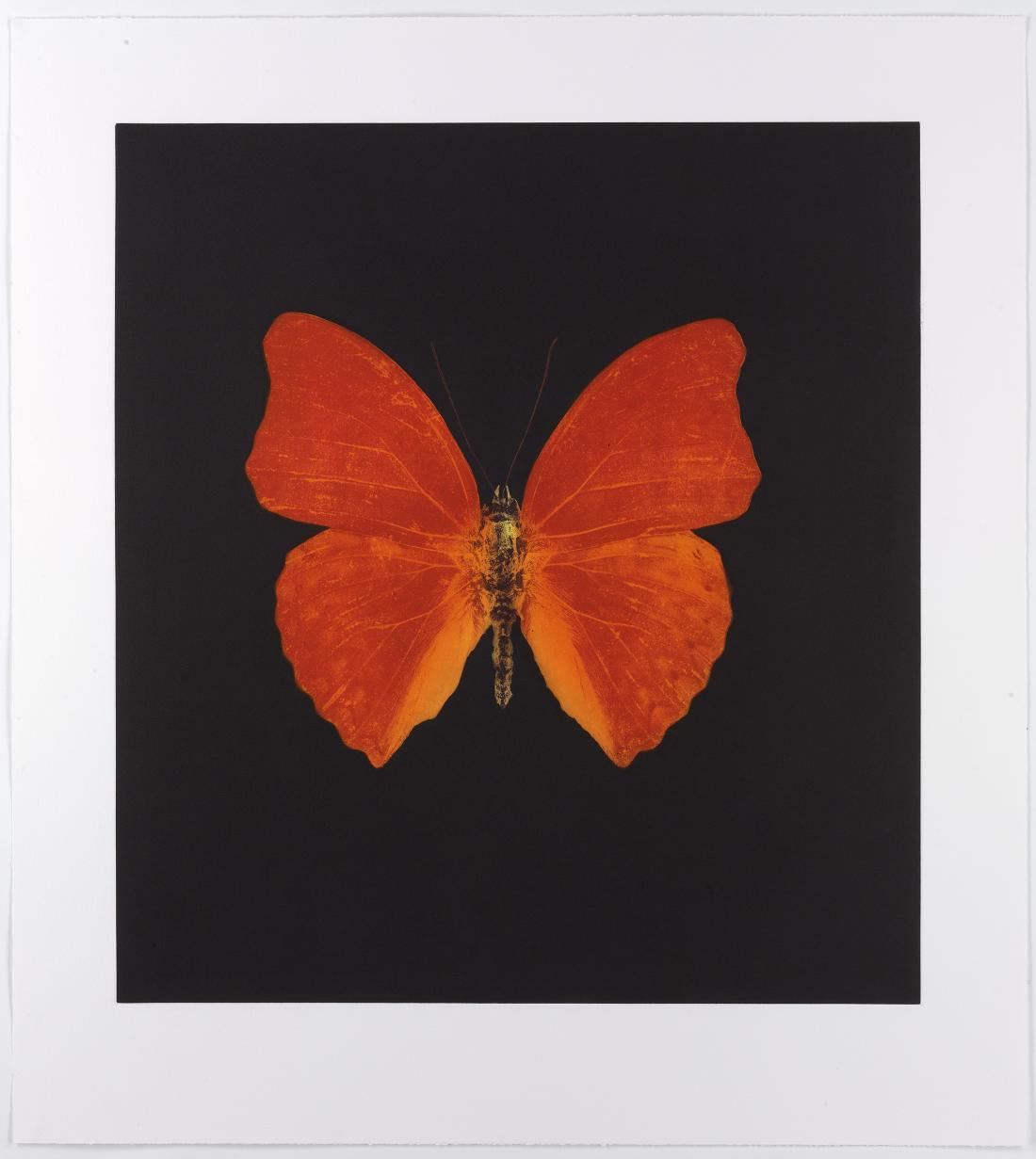
Hirst's use of butterflies has also been associated with darker themes, such as death and decay. The Butterfly Kaleidoscope works, for example, were often seen as representations of the fragility of life and the inevitability of death, as the brightly coloured butterfly wings contrasted with the darkened, decaying spaces in which they were exhibited.
Discover our collection of Damien Hirst prints for sale or contact Andipa Editions via sales@andipa.com or call +44 (0)20 7589 2371 to buy a Damien Hirst print.