-
S
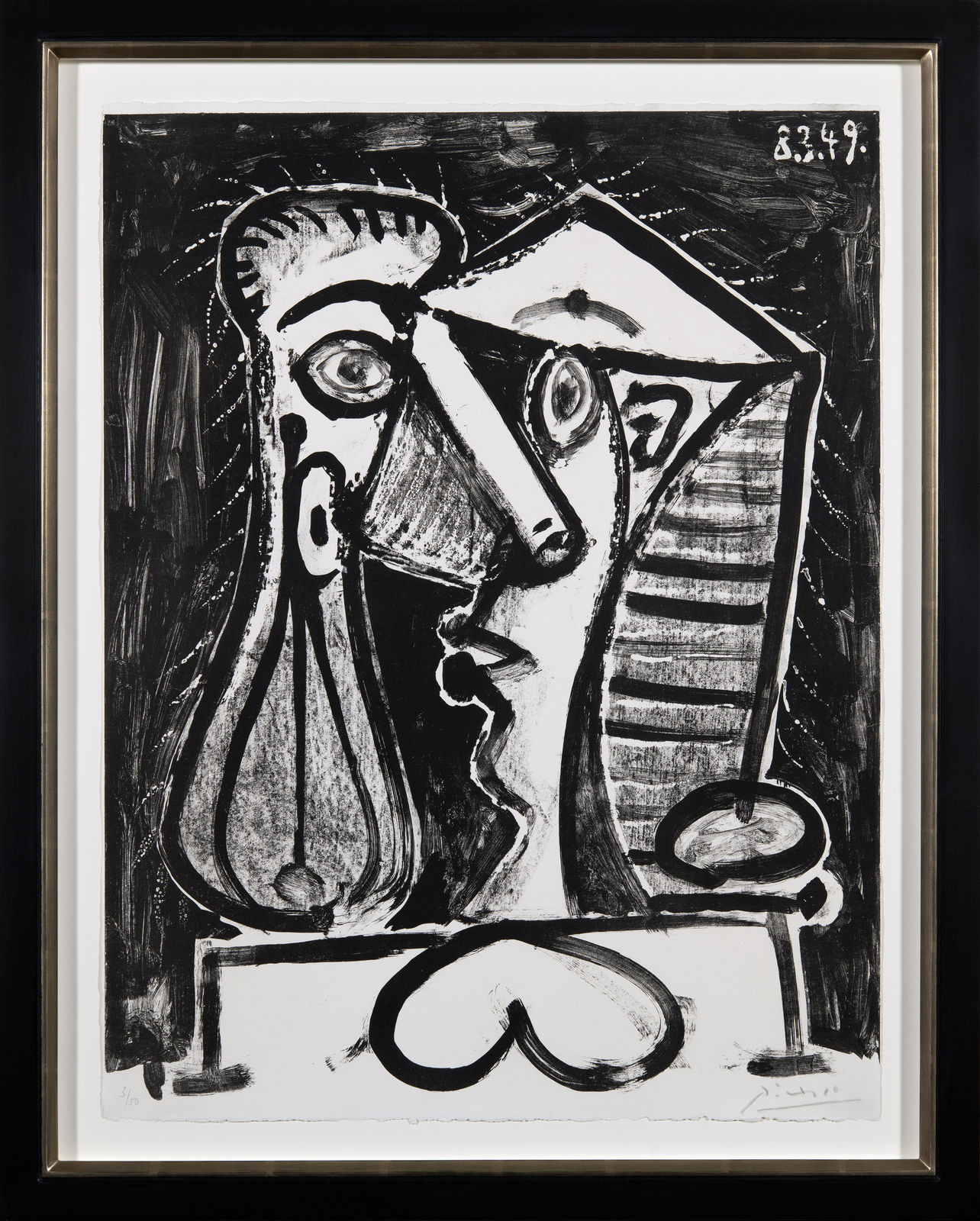
 Pablo Picasso, Figure Composee II, 1949 (9958) (2000) Framed
Pablo Picasso, Figure Composee II, 1949 (9958) (3000) Unframed
Pablo Picasso, Figure Composee II, 1949 (9958) (2000) Framed
Pablo Picasso, Figure Composee II, 1949 (9958) (3000) Unframed
Pablo Picasso
Figure Composée II, 1949Lithograph on Arches wove paper
65 x 50 cm.
25 1/2 x 19 3/4 in.Edition 3 of 50 (plus six proofs)Signed and numbered in pencil
FramedPOAEdition 3 of 50 on Arches wove paper, plus six proofs. Pablo Picasso’s Figure Composée II of 1949 is a small but unsettling drama in black and white. Made as...Edition 3 of 50 on Arches wove paper, plus six proofs.
Pablo Picasso’s Figure Composée II of 1949 is a small but unsettling drama in black and white. Made as a lithograph in Paris, it belongs to his intense post-war exploration of printmaking, when he was pushing the possibilities of the lithographic stone in collaboration with master printers such as Fernand Mourlot.
At first glance the image appears to be a single head. Look more closely and it begins to slip and fracture. Picasso folds together frontal and profile views into one mask-like visage: one eye meets ours directly while the rest of the features seem to slide sideways. Nose, mouth, neck and patterned hair are compressed into a tight, almost claustrophobic space. The face remains just recognisable yet constantly feels on the verge of coming apart.
The title, Figure Composée – “composed figure” – is telling. Rather than depicting a stable personality, Picasso builds the figure from clashing shapes, insistent linear rhythms and stark contrasts of black and white. Dense blacks press against scraped, luminous whites; nervous hatchings animate the surface. Even without colour, the head feels tactile and energetic, as if it were being assembled and dismantled before our eyes.
Beneath this formal experimentation lies a clear emotional tension. The compressed space suggests a mind under pressure; the doubled viewpoint hints at divided identity or conflicting feelings. The figure is at once mask-like and vulnerable. In this relatively modest sheet, Picasso turns the simple motif of a head into a meditation on how we see others, and ourselves, never from a single, fixed angle, but as a shifting composition of fragments.Publications
Georges Bloch, Picasso: Catalogue of Printed Graphic Work 1904-1967, 5th ed., I (1968; reprint, Berne: Editions Kornfeld & Cie, 1998), 597
Fernand Mourlot, Picasso: Lithographs (1970; reprint, Boston: Boston Book and Art Publisher , 1970), 166Erich Frank, Feliz Reusse & Ulrike Gauss, Pablo Picasso: Lithographs, Ulriek Gauss (2000; reprint, Ostfildern-Ruit: Hatje Cantz Publishers, 2000)
1de 8


Join Our Mailing List
* denotes required fields
We will process the personal data you have supplied to communicate with you in accordance with our Privacy Policy. You can unsubscribe or change your preferences at any time by clicking the link in our emails.